
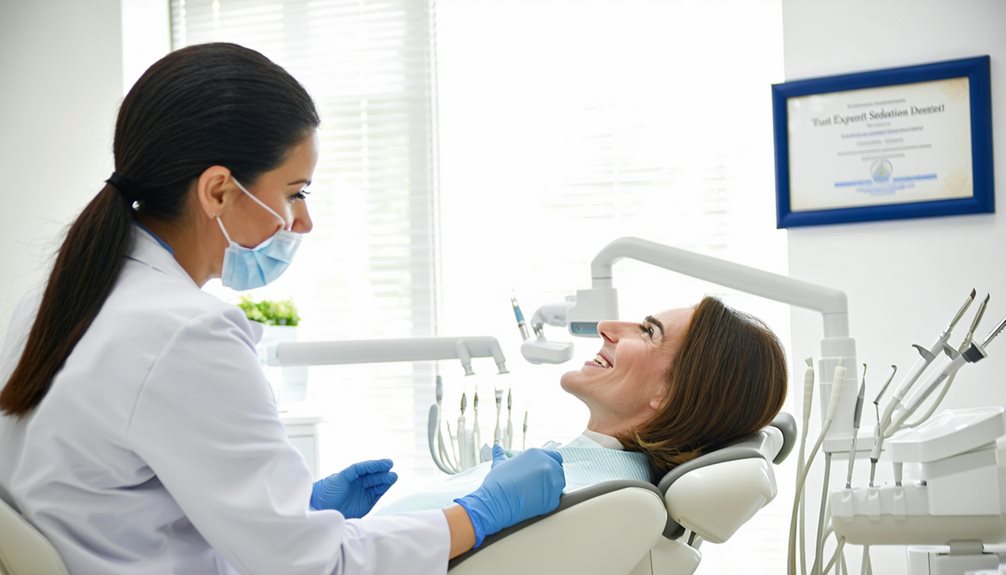
Selecting an expert sedation dentist involves a multifaceted approach to guarantee safety and peak care. First, verify the dentist’s qualifications and certifications from reputable organizations, such as the ADA or DOCS, to guarantee proficiency in sedation techniques. Evaluate their experience by examining the variety and volume of procedures they handle, and their adherence to rigorous safety protocols, including emergency preparedness and ACLS-certified staff. Review patient testimonials to gauge satisfaction and assess their communication skills to guarantee personalized treatment. Finally, prioritize dentists engaged in continuous education, reflecting a commitment to evolving sedation practices. Discovering further insights can enhance your understanding.
Research Qualifications
When seeking a qualified sedation dentist, it is essential to conduct thorough research on their professional qualifications to guarantee the highest standard of care. In the area of sedation dentistry, expertise in various sedation techniques is vital to cater to diverse patient needs. A dentist proficient in this field should possess a thorough understanding of methods such as oral sedation, intravenous sedation, and nitrous oxide, each designed to alleviate patient anxiety and assure comfort during dental procedures.
Evaluating a sedation dentist’s qualifications involves scrutinizing their educational background and specialized training in sedation techniques. Evidence-based practice dictates that these professionals should have completed advanced courses or certifications focusing on the safe administration of sedatives. Additionally, their experience in handling patients with varying levels of dental anxiety can serve as an indicator of their capability to tailor sedation approaches to individual cases.
In this constantly evolving field, dentists who actively engage in continuing education demonstrate a commitment to adopting innovative practices and technologies. This dedication is vital for addressing patient anxiety effectively and guaranteeing procedures are performed with utmost precision and safety.
Consequently, a well-researched selection process, emphasizing qualifications in sedation techniques, is fundamental in securing the best patient care.
Check Certifications
Verifying certifications is a critical step in selecting a competent sedation dentist. In the domain of dental care, the certification importance cannot be overstated, serving as a hallmark of a dentist’s commitment to professional excellence and patient safety.
Certifications guarantee that the practitioner has undergone rigorous sedation training, equipping them with the necessary skills to administer sedation safely and effectively. This is particularly crucial in the context of sedation dentistry, where precise knowledge and adherence to protocols are paramount.
Innovative patients recognize that modern dentistry demands a blend of cutting-edge techniques and well-established safety standards. By verifying a dentist’s credentials, patients can ascertain that their chosen provider is not only abreast of the latest advancements but also compliant with industry regulations.
Certification from reputable organizations, such as the American Dental Association (ADA) or the Dental Organization for Conscious Sedation (DOCS), underscores a dentist’s dedication to maintaining high standards of care.
Evaluate Experience
While certifications provide a foundational assurance of a sedation dentist’s qualifications, evaluating their experience is equally important. Experience offers insight into a dentist’s proficiency with sedation techniques and the intricacies of patient monitoring.
An experienced sedation dentist is likely to have navigated a range of clinical scenarios, enhancing their ability to anticipate complications and respond effectively. This depth of experience fosters innovation in tailoring sedation plans to individual patient needs, ensuring comfort and safety.
To evaluate experience effectively, consider the volume and variety of procedures performed under sedation. A dentist who regularly employs sedation techniques is more adept at managing both routine and complex cases.
In addition, inquire about their familiarity with the latest advancements in sedation technology and patient monitoring systems. Such expertise not only demonstrates a commitment to continuous improvement but also reflects an ability to integrate cutting-edge solutions into practice.
Moreover, the dentist’s participation in professional development activities, such as workshops and conferences on sedation dentistry, can be indicative of their dedication to staying informed about emerging trends.
This ongoing engagement with the field is essential for maintaining high standards of care and embracing innovative practices that benefit patients.
Read Patient Reviews
Reading patient reviews is an essential step in evaluating the quality of care provided by sedation dentists.
By analyzing online testimonials, potential patients can gain insights into the experiences of others, which can aid in making informed decisions about their dental care.
Additionally, reviewing star ratings provides a quantitative measure of patient satisfaction, allowing for a more thorough understanding of a dentist’s reputation.
Analyze Online Testimonials
Patient reviews are an invaluable tool for understanding the quality of care provided by sedation dentists. Engaging in a detailed testimonials analysis allows prospective patients to gain insights into the experiences of others, equipping them with the knowledge needed to make informed decisions.
By meticulously examining online feedback, one can discern patterns and identify key strengths and weaknesses of dental practices that offer sedation services.
When analyzing testimonials, focus on recurring themes in patient experiences. Positive feedback often highlights the dentist’s expertise, the effectiveness of sedation techniques, and the overall comfort of the procedure. Conversely, negative comments may point to issues such as prolonged wait times or inadequate communication.
Such analysis not only uncovers the tangible aspects of care but also provides a glimpse into the dentist’s ability to innovate and adapt to patients’ needs.
Furthermore, consider the context of each review. A thorough understanding of how a sedation dentist handles a range of patient concerns can be gleaned from diverse testimonials. This approach guarantees that potential patients can confidently select a practitioner who aligns with their expectations and comfort levels.
In an era where patient-centered care is paramount, leveraging online feedback fosters a more personalized and satisfactory dental experience.
Evaluate Star Ratings
Star ratings serve as a quick snapshot of a sedation dentist’s reputation and can greatly influence prospective patients’ decisions. As a tool that distills complex patient experiences into a simple, quantifiable metric, star ratings possess significant value in the decision-making process. The importance of star rating significance cannot be understated; it provides a preliminary filter for patients traversing the myriad options available in the field of sedation dentistry.
To maximize the utility of star ratings, engage in a thorough rating comparison.
However, it is essential to explore deeper into the context provided by the reviews accompanying these ratings to understand the full scope of patient experiences.
In an era where innovation and digital transparency are paramount, leveraging star ratings and accompanying reviews empowers patients to make informed choices. These ratings not only reflect past performance but also signify a commitment to continuous improvement and excellence in dental care.
Assess Comfort Level
Understanding a patient’s comfort level is essential to delivering effective sedation dentistry, as it directly influences both the choice of sedation method and the overall treatment plan.
Patient anxiety is a significant factor that expert sedation dentists evaluate meticulously. Studies indicate that addressing patient anxiety not only enhances the efficacy of the treatment but also fosters a more positive dental experience.
Sedation methods, ranging from minimal sedation through inhaled nitrous oxide to more profound intravenous sedation, are selected based on a thorough assessment of the patient’s unique comfort requirements and medical history.
Innovative dental practices embrace advanced techniques to assess and enhance comfort levels, integrating technology such as virtual reality and biofeedback to gauge and mitigate anxiety.
Skilled sedation dentists employ these tools to tailor personalized sedation strategies that align with individual patient profiles. By doing so, they guarantee a seamless shift from anxiety to tranquility, paving the way for ideal dental outcomes.
Moreover, effective communication is pivotal. Dentists must engage with patients to understand their fears and preferences, creating an atmosphere of trust and reassurance.
This informed dialogue not only helps in selecting the most suitable sedation method but also empowers patients, making them active participants in their dental care journey.
Verify Safety Protocols
When verifying safety protocols in sedation dentistry, it is essential to check the certification credentials of the attending dentist to guarantee they meet the industry standards for safe sedation practices.
Additionally, evaluating emergency procedures is paramount, as it confirms the dental practice’s preparedness to handle potential complications promptly and effectively.
Check Certification Credentials
Guaranteeing patient safety during dental procedures involving sedation is paramount, and verifying the certification credentials of a sedation dentist is a critical step in this process. Sedation dentistry requires specialized skills and training, underscoring the necessity of safety certifications which confirm that a dentist is well-versed in the latest sedation techniques and safety practices. Certification serves as a proof of a dentist’s proficiency in administering sedation safely and effectively, guaranteeing minimal risk to patients.
One of the primary organizations providing such credentials is the American Dental Association (ADA). Membership in this and other reputable dental associations often requires dentists to meet stringent standards, including continuing education in sedation dentistry.
These associations play a pivotal role in maintaining high professional standards, offering resources that keep practitioners abreast of innovative and safe sedation methodologies.
Furthermore, it is advisable to confirm that the dentist in question has completed an accredited sedation training program. This guarantees they are equipped with thorough knowledge in pharmacology, emergency management, and patient monitoring specific to sedation.
Assess Emergency Procedures
In addition to verifying certification credentials, it is imperative to assess a sedation dentist‘s emergency procedures to guarantee patient safety. This involves a thorough evaluation of their emergency protocols, which should be designed to address any unforeseen dental emergencies swiftly and effectively.
Ensuring these protocols are not only in place but also up-to-date with the latest advancements in dental care is essential. As innovations in sedation dentistry continue to evolve, so too should the strategies for managing potential complications.
A well-prepared sedation dentist will have robust emergency protocols, including immediate access to important medications and equipment, such as oxygen tanks and automated external defibrillators (AEDs).
Staff should be trained in advanced cardiac life support (ACLS) and capable of executing emergency procedures with precision. Additionally, understanding the dentist’s communication plan for handling emergencies, both within the office and with local healthcare facilities, is critical.
Innovative approaches to emergency preparedness can greatly enhance patient safety and outcomes. By choosing a sedation dentist who prioritizes extensive emergency management, patients can feel assured that their well-being is safeguarded against any unexpected complications that may arise during dental procedures.
Frequently Asked Questions
What Is the Average Cost of Sedation Dentistry Services?
The average cost of sedation dentistry varies widely based on factors such as procedure type and location. Cost comparison is essential, as fees typically range from $150 to $500 per hour, depending on insurance coverage and provider expertise.
How Long Does the Sedation Effect Typically Last?
The sedation duration in dental procedures typically spans from two to six hours, depending on the method used. This timeframe considerably enhances the patient experience, offering a more relaxed and comfortable environment for innovative dental care.
Are There Any Dietary Restrictions Before Undergoing Sedation Dentistry?
Prior to sedation dentistry, adhering to pre-sedation guidelines is essential. Patients are generally advised to abstain from food and drink for a specified period, ensuring ideal patient preparation and minimizing potential complications during the procedure.
Can I Drive Myself Home After a Sedation Dentistry Appointment?
Driving post-sedation dentistry is generally discouraged due to impaired reflexes and judgment during sedation recovery. Arranging alternative transportation is recommended to guarantee safety and compliance with post-appointment care guidelines, fostering a smooth and innovative recovery process.
Are There Sedation Options for Patients With Specific Allergies?
Dentists can address allergy concerns by offering sedation alternatives tailored to individual needs. An innovative approach may include using non-allergenic medications or techniques such as nitrous oxide, ensuring patient safety and comfort during dental procedures.
Conclusion
In summary, finding an expert sedation dentist necessitates a thorough evaluation of qualifications, certifications, and experience. Critical assessment of patient reviews offers insights into the dentist’s reputation and service quality. Comfort level during consultations is paramount, as it impacts patient experience and treatment outcomes. Verification of safety protocols guarantees adherence to industry standards, safeguarding patient welfare. A methodical approach in these aspects facilitates the selection of a competent sedation dentist, enhancing the likelihood of positive dental care experiences.

