
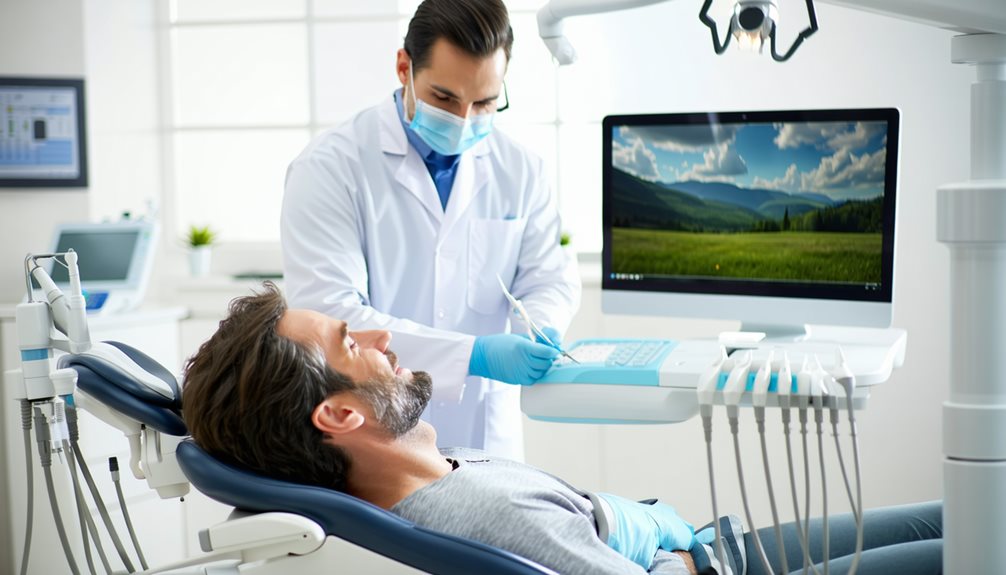
Sedation dentistry is minimally invasive due to its implementation of pharmacological agents that enhance tissue preservation and minimize procedural trauma. Techniques such as oral sedation, nitrous oxide, and intravenous sedation are tailored to individual patient needs, optimizing both anxiolytic and sedative effects while preserving the structural integrity of dental tissues. By reducing patient anxiety and promoting relaxation, sedation dentistry alleviates physiological stress responses, leading to less post-operative discomfort and quicker recovery. The adoption of cutting-edge technology and evidence-based practices guarantees sedation is safe and effective, offering an expanded spectrum of care for anxious or medically compromised patients. Continue to explore how these methods transform dental experiences.
Understanding Sedation Dentistry
Sedation dentistry, sometimes referred to as sleep dentistry, involves the administration of pharmacological agents to facilitate a state of relaxation and analgesia during dental procedures. This approach addresses patient anxiety and enhances the overall patient experience.
The selection of sedation methods is contingent upon patient-specific factors, including anxiety levels, medical history, and the complexity of the dental procedure. The spectrum of sedation ranges from minimal, where the patient remains awake and relaxed, to deep sedation, bordering unconsciousness.
Common sedation methods include inhalation sedation, oral sedation, and intravenous sedation. Nitrous oxide, or "laughing gas," is a prevalent inhalation agent that induces minimal sedation, allowing patients to remain fully conscious and responsive.
Oral sedation employs benzodiazepines, providing moderate sedation with amnesic effects, while intravenous sedation offers precise control over sedation depth, facilitating rapid onset and adjustment.
The clinical objective of sedation dentistry is to optimize the patient experience by minimizing discomfort and psychological distress. This innovative approach integrates pharmacological advancements with patient-centric care, thereby fostering a conducive environment for the delivery of dental treatment.
Understanding sedation dentistry necessitates a thorough grasp of pharmacodynamics and individualized patient care strategies.
Benefits of Minimal Invasiveness
While sedation methods play a pivotal role in enhancing patient comfort and compliance during dental procedures, the concept of minimal invasiveness offers equally significant benefits in modern dentistry. The integration of minimally invasive techniques aligns with contemporary paradigms of patient empowerment by prioritizing tissue preservation and reducing procedural trauma.
This approach not only minimizes post-operative discomfort and accelerates recovery but also enhances long-term oral health outcomes by maintaining the structural integrity of teeth and surrounding tissues.
Minimal invasiveness expands treatment accessibility by alleviating barriers associated with traditional, more invasive procedures. Patients who might otherwise forego necessary dental care due to anxiety or concerns about extensive interventions are more likely to pursue treatment when presented with less invasive options.
Such techniques often require less chair time and fewer appointments, optimizing the healthcare delivery model and expanding the scope of care to underserved populations.
Moreover, innovations in dental technology, such as laser dentistry and computer-aided design/computer-aided manufacturing (CAD/CAM), enhance the precision and effectiveness of minimally invasive procedures.
These advancements facilitate a synergistic relationship between sedation and minimal invasiveness, providing a thorough approach to patient-centered care. This paradigm fosters an environment where patients are empowered to engage actively with their dental health, ultimately promoting a more proactive and preventive approach to oral care.
Types of Sedation Techniques
How do dental professionals determine the most suitable sedation technique for patients undergoing various procedures? The selection process hinges on a thorough evaluation of the patient’s medical history, anxiety levels, and the complexity of the dental procedure.
Among the arsenal of sedation modalities, oral sedation and nitrous oxide remain pivotal techniques, each offering distinct advantages tailored to specific clinical scenarios.
Oral sedation, typically administered via benzodiazepines such as diazepam or triazolam, facilitates a profound anxiolytic effect, enhancing compliance and patient relaxation. This pharmacological intervention is particularly advantageous for procedures requiring prolonged duration or for patients presenting with heightened dental anxiety.
The oral route guarantees ease of administration and can be titrated to achieve the desired sedative depth.
Conversely, nitrous oxide, colloquially known as "laughing gas," provides a rapid-onset, easily reversible sedative effect. Administered through inhalation, nitrous oxide is ideal for pediatric patients or individuals requiring minimal sedation.
Its titratable nature allows for precise control, fostering an innovative approach to patient management with minimal post-procedural residual effects.
Patient Comfort and Anxiety Reduction
In the domain of sedation dentistry, prioritizing patient comfort and reducing anxiety are paramount to facilitating stress-free dental visits.
By implementing enhanced relaxation techniques such as guided imagery and controlled breathing exercises, practitioners can greatly alleviate dental apprehension.
Additionally, the use of tailored sedation options guarantees individualized care, optimizing both the physiological and psychological well-being of patients during dental procedures.
Stress-Free Dental Visits
Dental anxiety, affecting approximately 36% of the population, presents a significant barrier to receiving necessary oral healthcare. This pervasive apprehension complicates patient adherence to recommended treatment protocols and contributes to less-than-ideal oral health outcomes.
Sedation dentistry emerges as a transformative solution, offering stress relief through pharmacological interventions tailored to individual patient needs. By employing agents such as nitrous oxide, oral sedatives, or intravenous (IV) sedation, practitioners can mitigate physiological responses linked to dental anxiety, including elevated heart rates and psychosomatic discomfort.
The efficacy of sedation dentistry in fostering stress-free dental visits is predicated upon its ability to modulate the central nervous system effectively, thereby attenuating anxiety responses. This modality enhances patient compliance and facilitates the execution of intricate dental procedures with minimal patient distress.
Clinicians must evaluate the patient’s medical history, anxiety levels, and procedural requirements to determine the best sedation strategy, ensuring both safety and effectiveness.
Incorporating sedation into dental practice not only enhances patient comfort but also aligns with the broader trend towards minimally invasive techniques. By prioritizing patient well-being and reducing procedural stress, sedation dentistry represents a significant advancement in modern oral healthcare, ultimately promoting a culture of innovation and patient-centric care.
Enhanced Relaxation Techniques
While sedation dentistry effectively addresses physiological responses to anxiety, non-pharmacological enhanced relaxation techniques further augment patient comfort and anxiety reduction. These techniques serve as complementary interventions to pharmacological sedation, mitigating anxiety through cognitive and behavioral modalities.
Among these, deep breathing exercises are pivotal, promoting parasympathetic nervous system activation, which induces a state of calmness and physiological relaxation. This technique involves diaphragmatic breathing, which enhances oxygenation and attenuates sympathetic arousal, thereby reducing the perception of anxiety during dental procedures.
In addition to deep breathing, guided imagery is a potent cognitive strategy that involves the patient in a mental visualization process, steering focus away from dental stimuli.
Incorporating these enhanced relaxation techniques in sedation dentistry regimens not only optimizes procedural outcomes but also aligns with the paradigm of minimally invasive dentistry by prioritizing patient-centered care. These innovations underscore the importance of integrating holistic strategies to elevate patient experience.
Tailored Sedation Options
Sedation options in dentistry are not a one-size-fits-all solution; rather, they require careful customization to meet individual patient needs and preferences, guaranteeing ideal comfort and anxiety reduction.
The tailored approach involves evaluating various factors such as medical history, procedural complexity, and psychological disposition. By integrating these parameters, dental professionals can determine the most appropriate sedation modality—ranging from nitrous oxide inhalation to oral sedatives or intravenous sedation.
Customized sedation protocols are devised by meticulously evaluating patient preferences, which play a pivotal role in optimizing procedural outcomes.
Modern sedation dentistry embraces innovation, employing advanced pharmacological agents that provide rapid onset and predictable recovery profiles. This guarantees that patients experience minimal post-procedural discomfort and disruption to daily activities.
Additionally, the deployment of tailored sedation options enhances patient compliance, thereby facilitating more thorough and efficient dental care.
From a clinical perspective, the precision in customizing sedation not only augments patient comfort but also mitigates intraoperative anxiety.
This is paramount in complex dental interventions where patient cooperation is essential. By prioritizing patient-centric sedation strategies, dental practitioners are pioneering a minimally invasive paradigm that underscores both efficacy and safety.
Safety Measures in Sedation
Guaranteeing patient safety during sedation procedures is of utmost importance in dental practice. Adherence to stringent safety protocols is crucial to mitigate risks and enhance the efficacy of sedation dentistry. Extensive pre-sedation assessments are conducted to identify potential contraindications and patient-specific considerations, guaranteeing that sedation is tailored precisely to the individual’s medical history and procedural requirements.
Advanced monitoring equipment plays a critical role in maintaining peak patient safety throughout sedation. Continuous monitoring of essential parameters, such as oxygen saturation, heart rate, and blood pressure, guarantees that any deviations from baseline are promptly identified and addressed. The implementation of capnography, which measures end-tidal CO2, provides an additional layer of safety by enabling the early detection of respiratory compromise.
The clinical team must be proficient in emergency protocols, equipped with emergency resuscitation equipment, and trained in advanced cardiac life support. This preparedness guarantees immediate intervention should an adverse event occur. Moreover, the use of reversal agents, when appropriate, facilitates the rapid cessation of sedation effects, further safeguarding patient well-being.
Incorporating cutting-edge technology and evidence-based practices within sedation dentistry not only prioritizes patient safety but also underscores the commitment to innovation and excellence in dental care delivery.
Choosing the Right Dentist
Patient safety remains a cornerstone of sedation dentistry, underscoring the importance of selecting a dentist who is not only proficient in sedation techniques but also adheres to rigorous safety standards.
The selection process involves evaluating dentist qualifications, which encompass both academic credentials and specialized training in sedation methods. Board certification in sedation dentistry serves as a critical parameter, ensuring that the practitioner has undergone thorough training and evaluation.
Additionally, membership in professional organizations, such as the American Dental Society of Anesthesiology, can further validate a dentist’s expertise in sedation protocols.
Evaluating patient reviews provides invaluable insights into a dentist’s competence and reliability. Reviews often highlight patient experiences, offering a qualitative measure that complements the quantitative evaluation of clinical skills.
These testimonials can reveal a dentist’s ability to manage patient anxiety, maintain effective communication, and deliver satisfactory procedural outcomes.
As technological innovations continue to augment dental practices, it is imperative that the chosen dentist not only navigates the complexities of sedation with precision but also integrates cutting-edge techniques to enhance patient comfort and procedural efficacy.
Frequently Asked Questions
How Does Sedation Affect Dental Procedure Recovery Time?
The sedation effects can potentially expedite recovery time by minimizing physiological stress responses and reducing postoperative discomfort. Recovery benefits include enhanced patient compliance and reduced need for analgesics, contributing to a more seamless and efficient recuperation process in dental procedures.
Are There Any Dietary Restrictions Before Sedation Dentistry?
Pre sedation guidelines necessitate specific food intake restrictions to mitigate the risk of aspiration and enhance procedural safety. Typically, patients are advised to abstain from solid foods for 6-8 hours prior to sedation dentistry, ensuring ideal conditions.
Can Children Undergo Sedation Dentistry Safely?
Pediatric sedation dentistry prioritizes child safety by employing age-appropriate pharmacological agents and monitoring techniques. Sedation benefits include minimal anxiety and enhanced cooperation, facilitating complex procedures while adhering to stringent safety protocols, thereby innovatively addressing dental challenges in children.
What Are the Costs Associated With Sedation Dentistry?
The costs associated with sedation dentistry vary considerably, influenced by factors such as the type of sedation used. A cost comparison reveals variability, while insurance coverage often depends on policy specifics, potentially reducing out-of-pocket expenses for innovative dental procedures.
How Long Does the Effect of Sedation Last After the Procedure?
Sedation duration typically ranges from a few hours to 24 hours post-procedure, depending on the sedative’s type and dosage. Post-procedure effects may include drowsiness, impaired cognitive function, or delayed motor skills, necessitating appropriate post-care measures.
Conclusion
Sedation dentistry, characterized by its minimally invasive nature, markedly enhances patient experience by reducing anxiety and discomfort. Employing various sedation techniques, such as nitrous oxide, oral sedatives, and intravenous sedation, facilitates dental procedures while maintaining patient safety through rigorous monitoring and adherence to established protocols. The selection of an appropriately trained and experienced dentist is essential for ideal outcomes. Consequently, sedation dentistry represents a significant advancement in modern dental care, promoting patient compliance and procedural efficiency.

